

Responsibility
OTTO develops first Trendradar for sustainable logistics
The Sustainable Logistics Trendradar will be updated every two years in the future and is freely available to all interested companies, associations, and institutions. The interactive graphic serves as a strategic tool for companies.

Logistics is a very fast-paced industry that must continually adapt to market developments. External influences such as weather events or political crises affect the global supply chains used to transport goods. To make these supply chains more resilient, it is essential for companies to understand market developments and monitor emerging trends.
The Trend Radar was developed with the involvement of companies and associations (including Hermes, the German Logistics Association, the German Association of E-Commerce and Mail Order, and digital Hub Logistics & Commerce), as well as Fraunhofer IML, the Technical University of Munich, and the University of Hamburg. The Sustainable Logistics Trend Radar will be updated every two years and is available free of charge to all interested companies, associations, and institutions.
Sophie Hering, Multiplier Sustainability Climate & Logistics at OTTO: “The Trend Radar is a comprehensive tool that helps companies prepare for the future and identify relevant areas for action.”
What are the goals of the Trend Radar?
It provides guidance on sustainable logistics, helping to identify potential and derive targeted improvements.
It aims to provide decision-makers in business and academia with guidance and inspiration.
It aims to help companies remain competitive by using trend analysis and integration to inform their strategic direction.
Here you can open the Trend Radar.
The tool Trend Manager from Trendone was used to create the Trend Radar, providing both the technical framework and a source for the trends included.
How do you read the Trend Radar?
Hover over the rings and circles on the radar. Click on a point to view more details. The Trend Radar is divided into:
Megatrends (societal and technological structural changes with a 10-year impact horizon) – the outermost ring
Macrotrends: specific manifestations of megatrends that describe individual developments with different impact horizons – inner rings
Trends are categorized into Act (act immediately), Prepare (prepare for the trend), and Watch (observe the trend) – see the labels on the three inner rings.
Clicking on a macrotrend also provides information on its impact:
Influence: Describes the strength of the impact a trend is expected to have.
Time of mainstream adoption: When will the trend be adopted by the majority of market participants in the industry?
Competences: How well are companies already prepared for the trend?
What megatrends are there?
Artificial Intelligence (AI) and Data
Seamless Commerce
Planet Centricity
Intelligent Infrastructure
These include 31 macrotrends.
Using two example trends from the Act category, OTTO explains what they mean for the company.
The majority of trends are categorized as Act or Prepare, indicating that action is already required in the area of sustainable logistics.
ACT
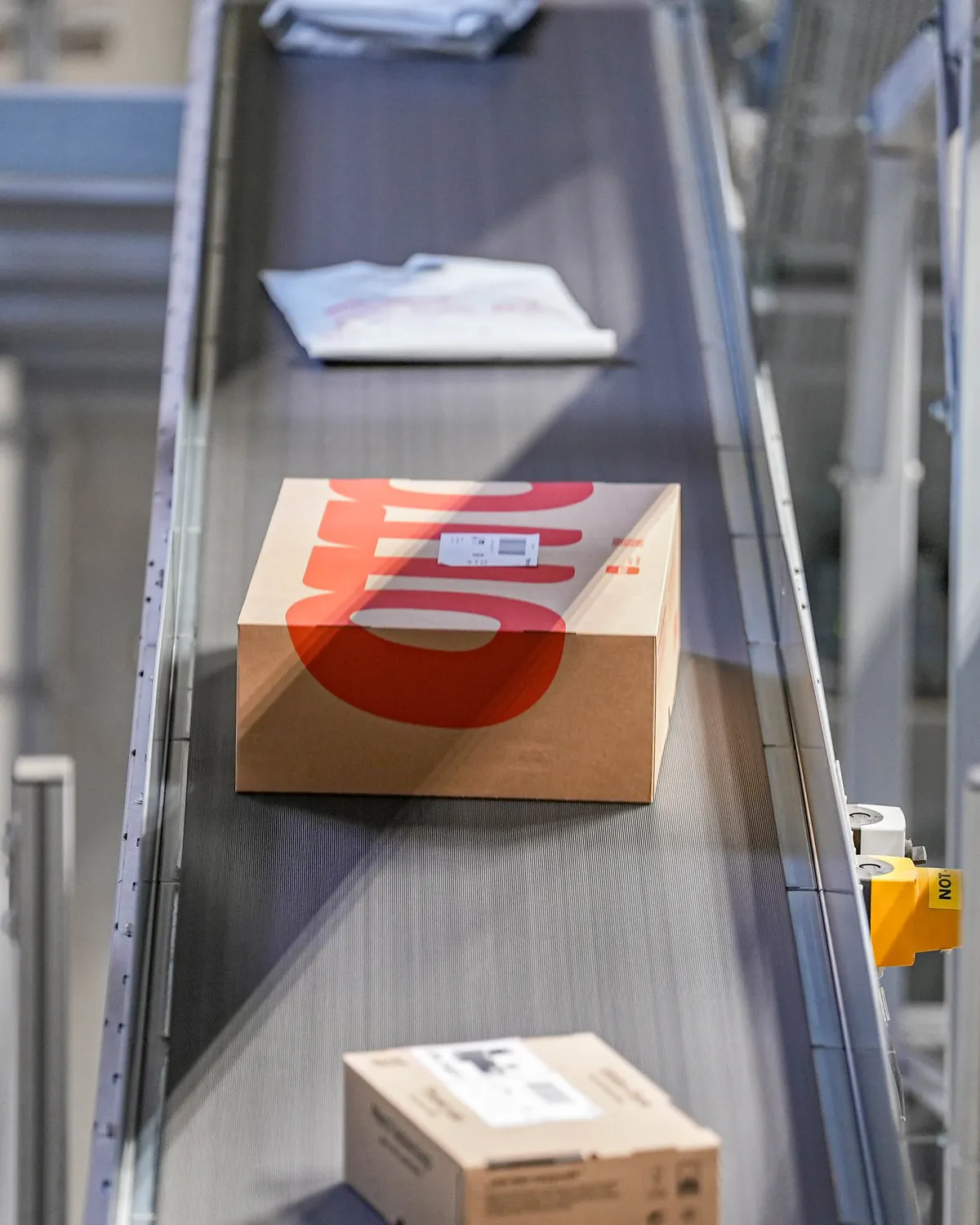
Rethink Packaging: Increasing demand for sustainable solutions requires creative packaging alternatives that can be recyclable, reusable, and compostable. This includes alternative materials and closed loops for packaging logistics.
What measures is OTTO implementing in packaging?
Collaboration with partners and alliances
Focus on new packaging solutions at OTTO: first major test with Paludi boxes last year
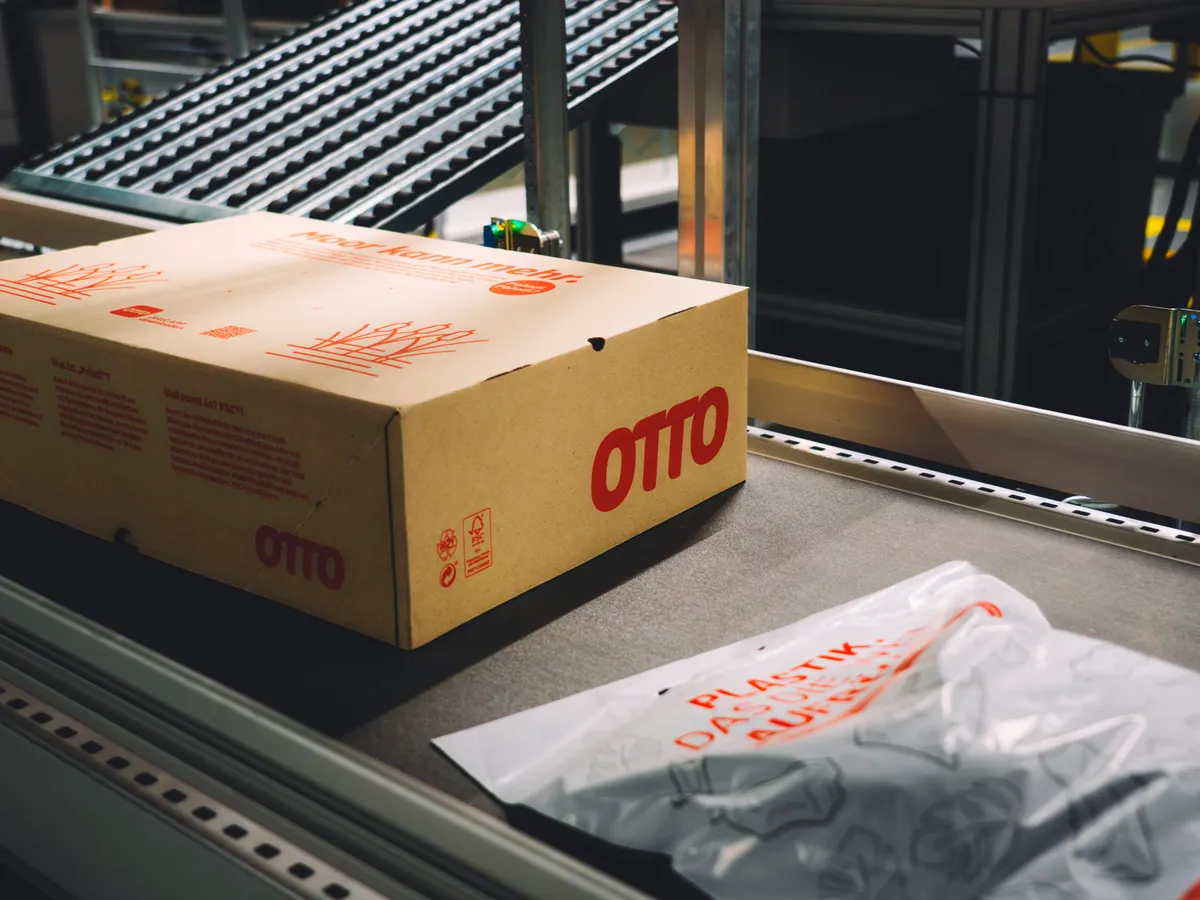
Use of recycled materials in product and shipping packaging, for example WILDPLASTIC shipping bags made from 100% recycled plastic
What is OTTO planning for packaging for the future?
Nature-based polymers as a substitute for plastics (traceless): Article Compostable shipping bags: “More complex than thought”
Optimization of packaging for large items
Regulatory requirements (PPWR) focus on reducing packaging waste and requirements for logistics sites. We are currently launching pilots for closed packaging loops in collaboration with WILDPLASTIC.
Decarbonization: Due to climate change, companies are compelled to change their behavior and use non-fossil energy resources. In the near future, the task is to transition to a post-fossil, post-carbon society. The main task is the global transition of the energy sector to renewable energy.
What is OTTO planning for the future of climate protection?
Further development of sustainability measures at logistics centers
Expansion of e-mobility in road transport
Expansion of collaboration with partners and other companies to create synergies, for example through the joint use of charging infrastructure for e-mobility.
Contact