

Responsibility
OTTO and traceless test shipping bags made from plant residues
Together with the Hamburg start-up, the largest German online retailer is testing innovative packaging for selected shipments. They are made from grass paper and a bio-based plastic substitute that biodegrades within two weeks.
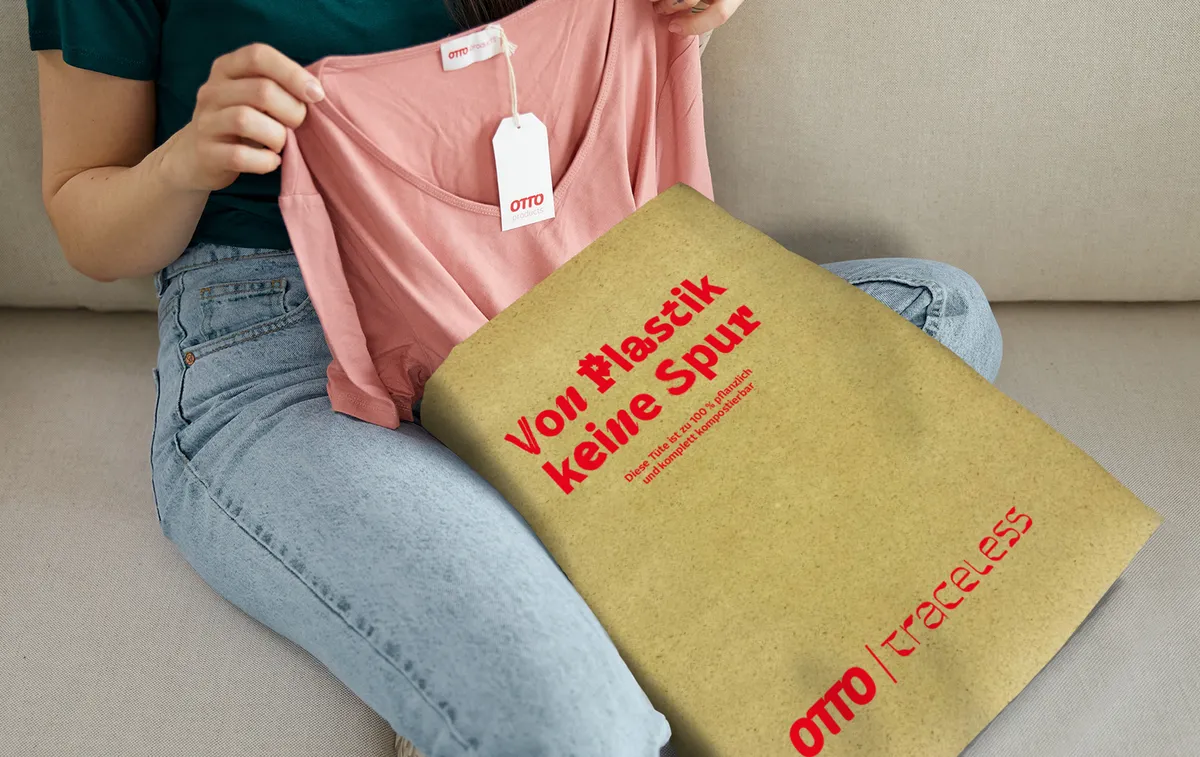

In a nationwide pilot test, OTTO is sending mailing bags made from plant-based residues to customers for the first time. The new bags were developed by OTTO together with Hamburg-based start-up traceless, recipient of the German Founder Award 2022. In the test, they replace conventional mailing bags made from recycled plastic.
OTTO mainly uses mailing bags for textiles and robust small items, such as vacuum cleaner bags or razor blades. Compared with shipping boxes, mailing bags require less packaging material. They also take up less space during transportation, allowing parcel services to carry more shipments per vehicle. The requirements for mailing bags are high: for example, they need to be completely opaque, water-resistant, and tear-resistant. Prototypes of the mailing bags developed by OTTO and traceless were tested and improved over several months. The first practical test will now assess how the traceless bags perform under real shipping conditions. There are no additional costs or disadvantages for customers.
Nationwide Test with Selected Customers
For Karla Jabben, packaging expert at OTTO, the upcoming practical test is an important milestone in the collaboration with traceless:
OTTO is starting its first test with traceless bags. What does this mean, and what exactly is happening?
In this first pilot test, we will send 5,000 mailing bags to customers who place an order during the test period. The material makes the bags look very different from our previous ones: they are very shiny, and the grass paper texture is clearly visible. Customers will not know in advance that they are receiving a traceless bag. This will allow us to collect feedback on their experience with the new packaging.
What is the aim of the test?
The traceless bag needs to meet various functional requirements before it can be used in the future. We primarily want to find out whether the bag works under real shipping conditions and protects the item inside. In addition, there should be as little air as possible in the bag so that the available storage space during transport can be used efficiently. Other points include whether the bags can be processed by the technical systems and whether they arrive intact at customers' homes, can be opened easily and, in the event of a return, resealed.
It is also important for us to know whether customers understand what is different about the material. An accompanying survey will help us assess this. We hope to gain insights that will help us further develop the bag.
And what happens next?
We are very curious to see what insights we will gain from the test. Of course, we hope that the traceless bags meet our high standards, because we would like to continue working with the traceless team and further develop the product. However, we also have to say: there is still a long way to go before the bags are fully developed.
Contact