

Responsibility
OTTO switches shipping bags completely to WILDPLASTIC
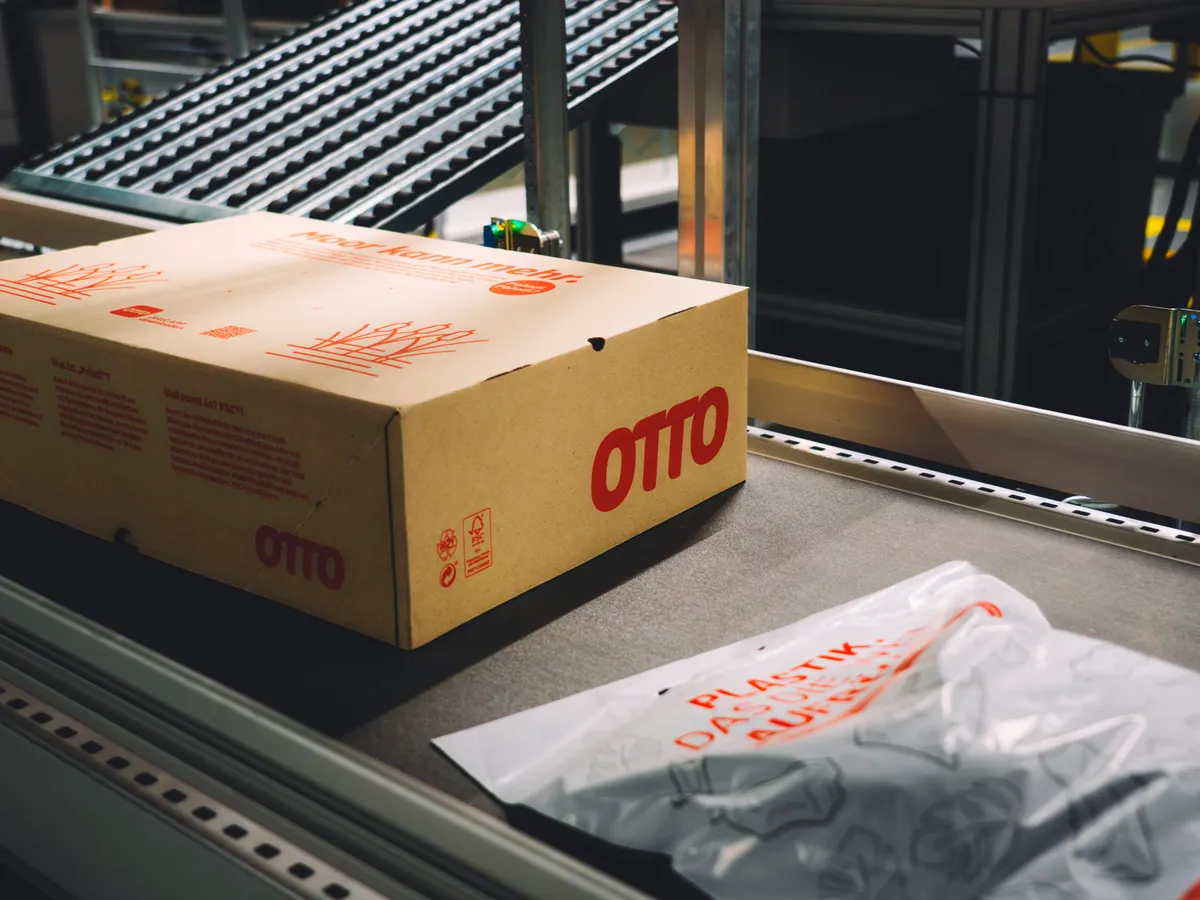
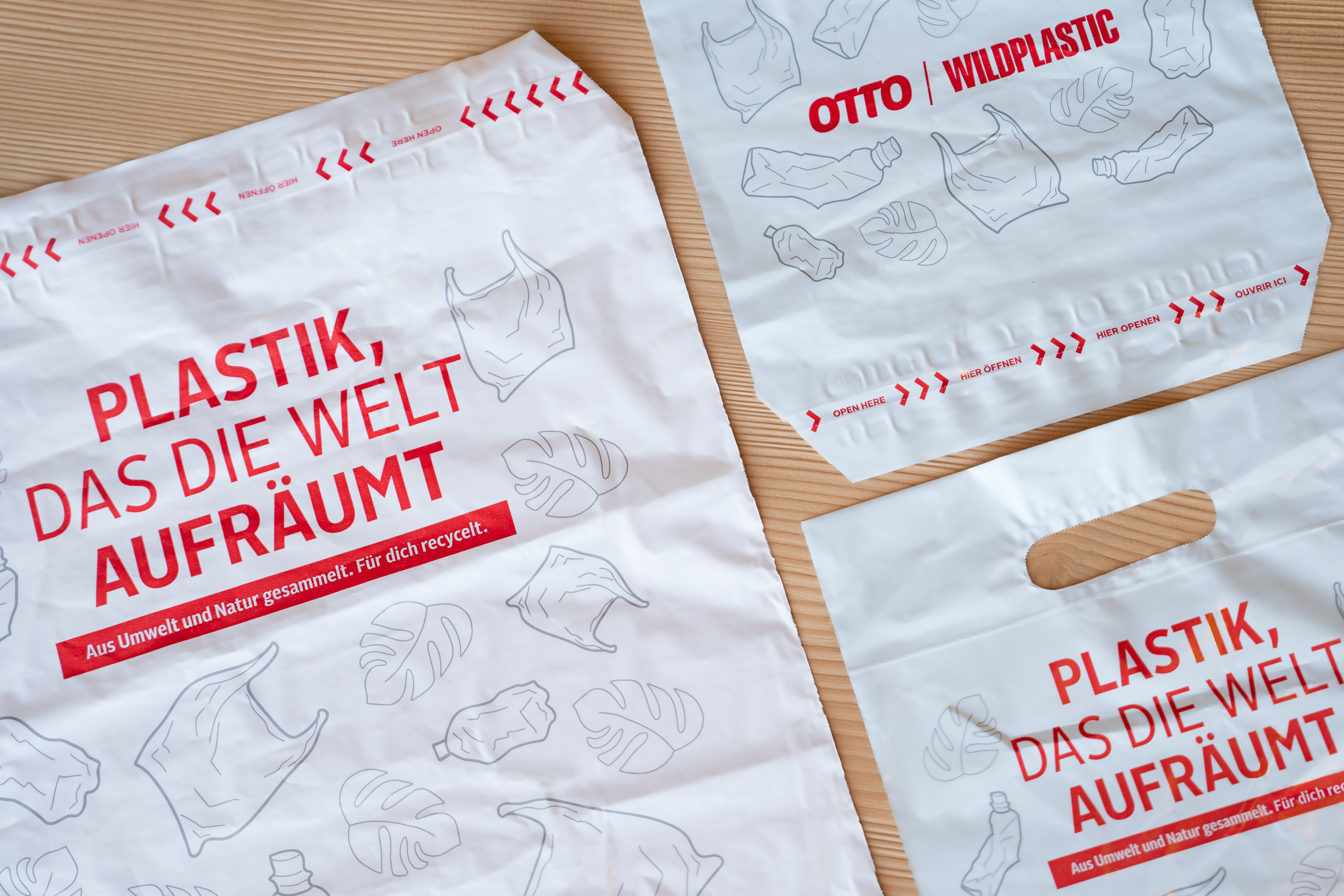
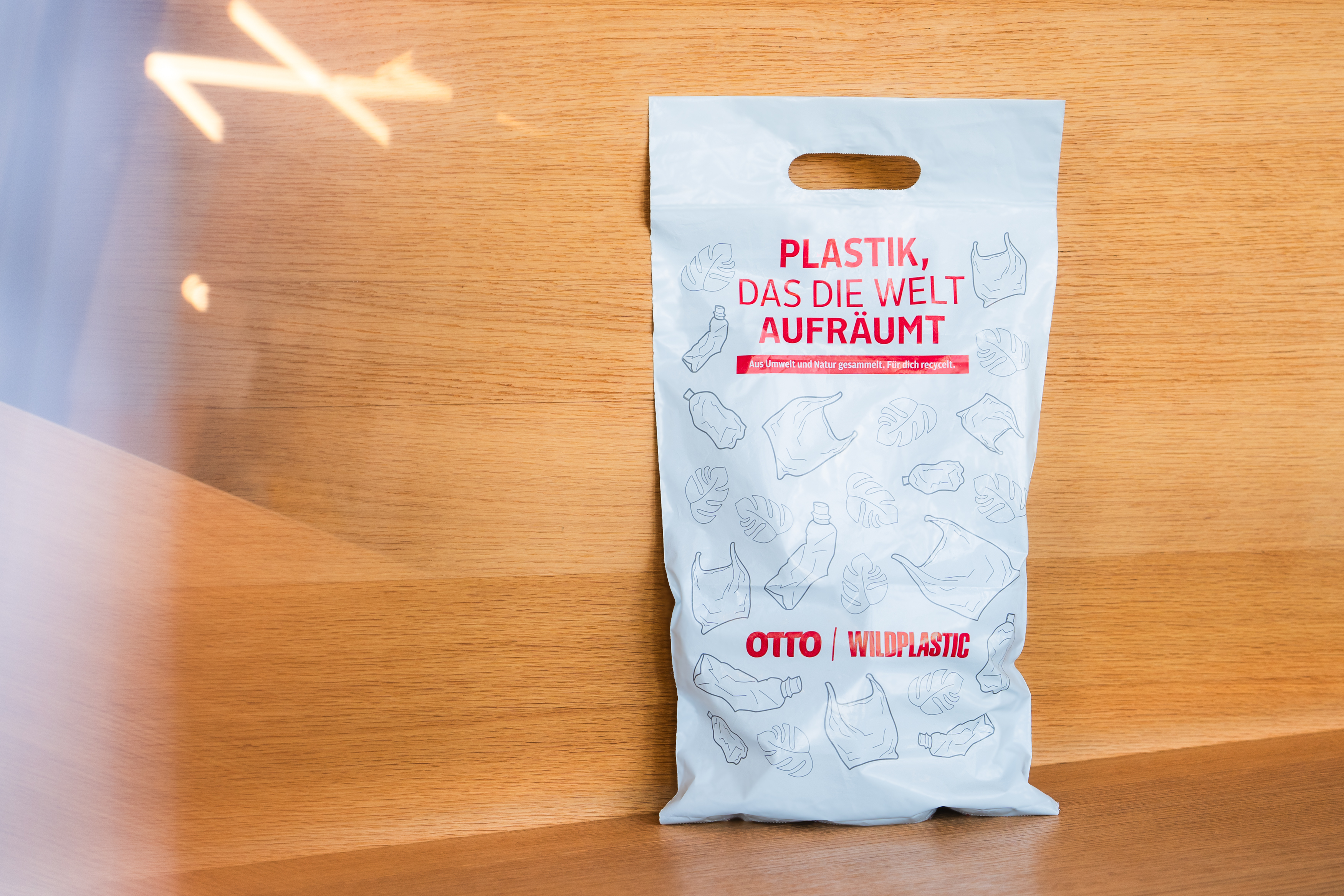
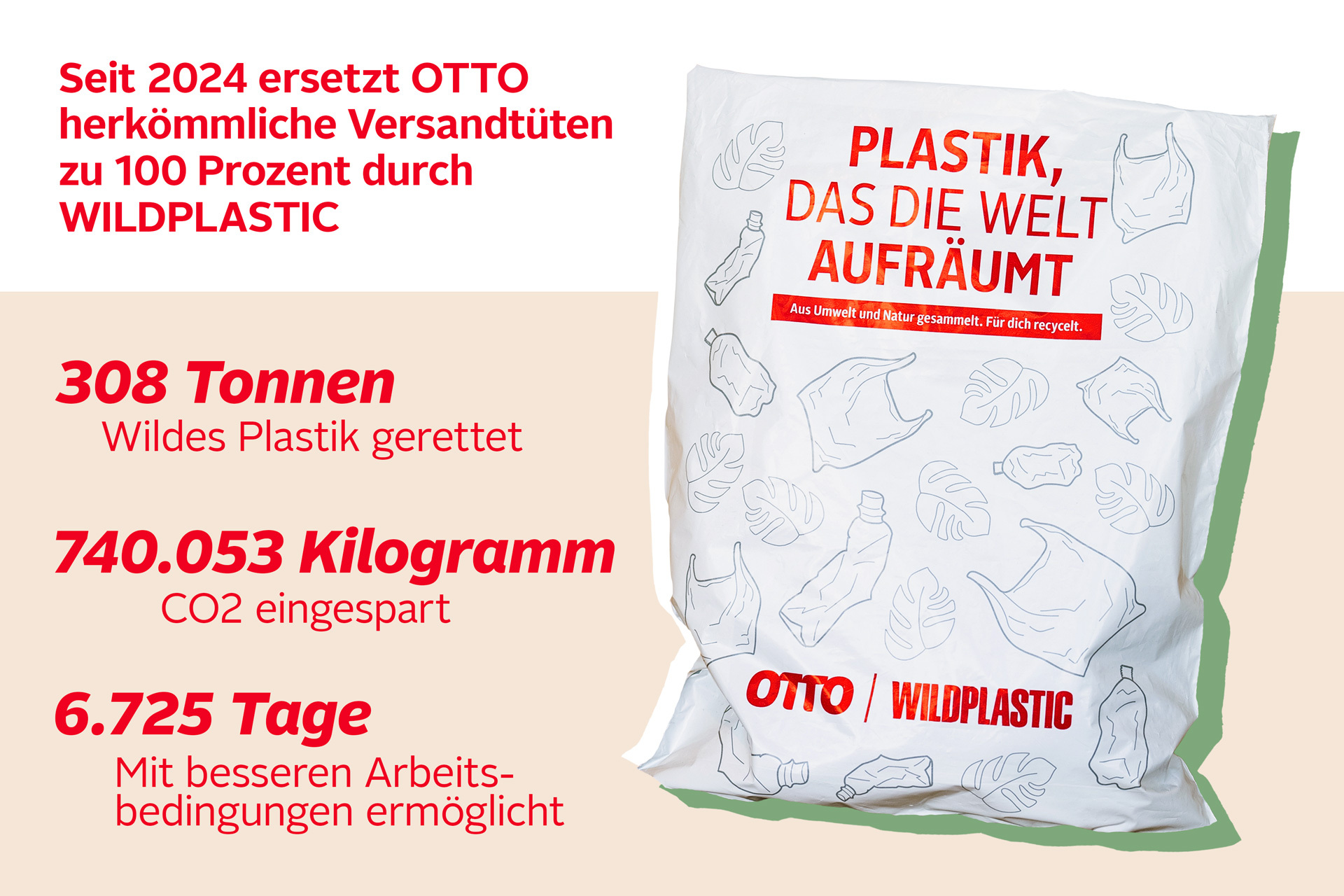
Through its close collaboration with the Hamburg-based company WILDPLASTIC, OTTO is switching its mailing bags to packaging made from plastic collected from the environment. Between 2021 and the end of 2023, around 308 tonnes of plastic were collected from the environment for OTTO’s mailing bags.
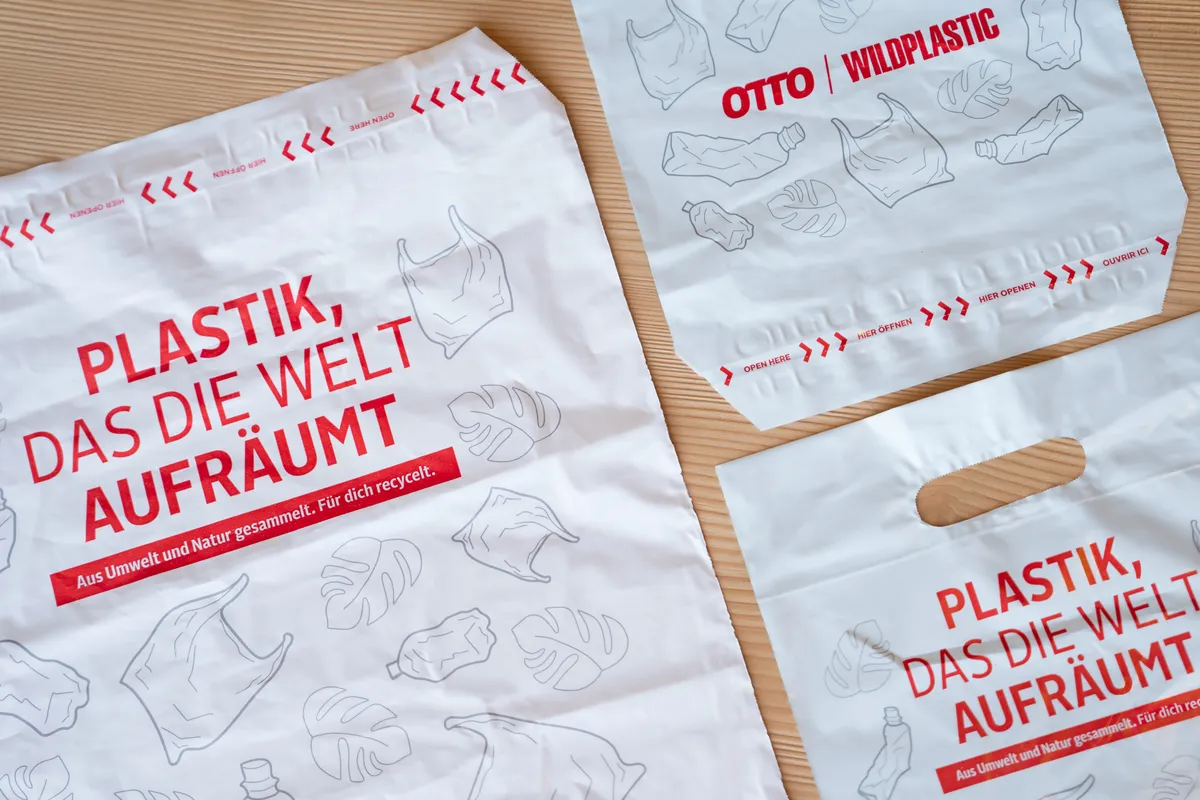

Nearly 80 percent of the plastic waste ever produced worldwide has ended up in the environment. OTTO now uses collected plastic waste processed by WILDPLASTIC for its mailing bags. Over the past four years, the largest German online retailer has developed a mailing bag made from plastic collected from the environment together with WILDPLASTIC. After a test phase in 2020, OTTO began converting its mailing bags to WILDPLASTIC material. The interim target of 50 percent was reached by the end of 2022. As of January 2024, the conversion has reached 100 percent.
Together with WILDPLASTIC and its partners, OTTO is working with local partners in the informal waste sector, including on pay and support programs for collectors. In cooperation with certified organizations on site, 6,725 days of support measures for collectors were provided during the aforementioned period.
OTTO uses collected plastic waste for mailing bags
Marc Opelt, CEO of OTTO: “I am very proud that we have achieved this milestone. And we want even more: our goal is to increase the use of recycled materials and to further develop reusable and other packaging solutions across our product and shipping packaging.”
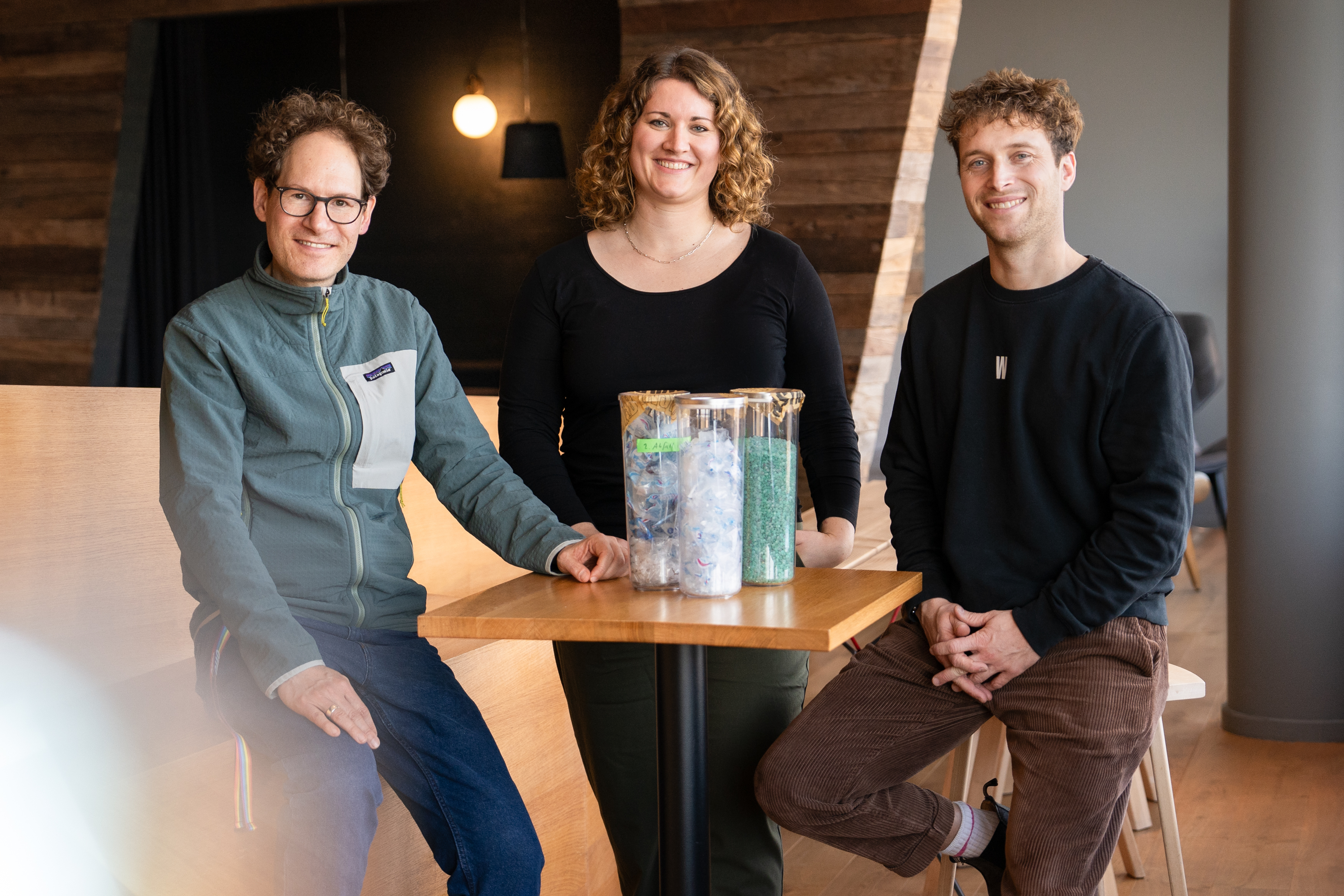
Christian Sigmund, CEO and co-founder of WILDPLASTIC: “We have achieved our joint goal of converting 100 percent of OTTO's mailing bags to WILDPLASTIC material. This demonstrates that the WILDPLASTIC supply chain can provide material for applications such as mailing bags. We now want to continue developing the collaboration together.”
Tobias Gruber, Head of Sustainability at OTTO: “As the largest German online retailer, we are working on packaging waste and the use of recycled materials in our packaging. The collaboration with WILDPLASTIC is one example of this work. And, of course, you can also purchase waste bags from WILDPLASTIC at OTTO.”
Karla Jabben, Sustainability Manager at OTTO: “We have reached the 100 percent target. On the way there, there were also some challenges, such as establishing the supply chain. A great deal of work from everyone involved went into reaching this point.”
At a glance
WILDPLASTIC bags at OTTO
OTTO has converted all mailing bags to WILDPLASTIC. We answer the most important questions.
Frequently asked
WILDPLASTIC is recycled plastic from plastic waste collected in nature. For this, WILDPLASTIC works with local partners who collect, process, and recycle the waste as a raw material. This is then used to make new material, which OTTO uses for its mailing bags, among other things.
With the mailing bags made from WILDPLASTIC, OTTO wants to help return plastic waste to the value chain. Countries like India, Indonesia, or Senegal currently do not have a closed waste recycling system. Initiatives like WILDPLASTIC help reduce plastic waste in the environment in these countries.
No. The mailing bags perform the same function as conventional shipping bags. They protect the goods during transport and can be recycled after use through the appropriate collection systems for plastics - for example, the yellow bin.
Press Contact