

Responsibility
Why gender-inclusive language matters
How important is it to speak and write in a gender-fair way? At OTTO, we decided in 2019 to change our language.
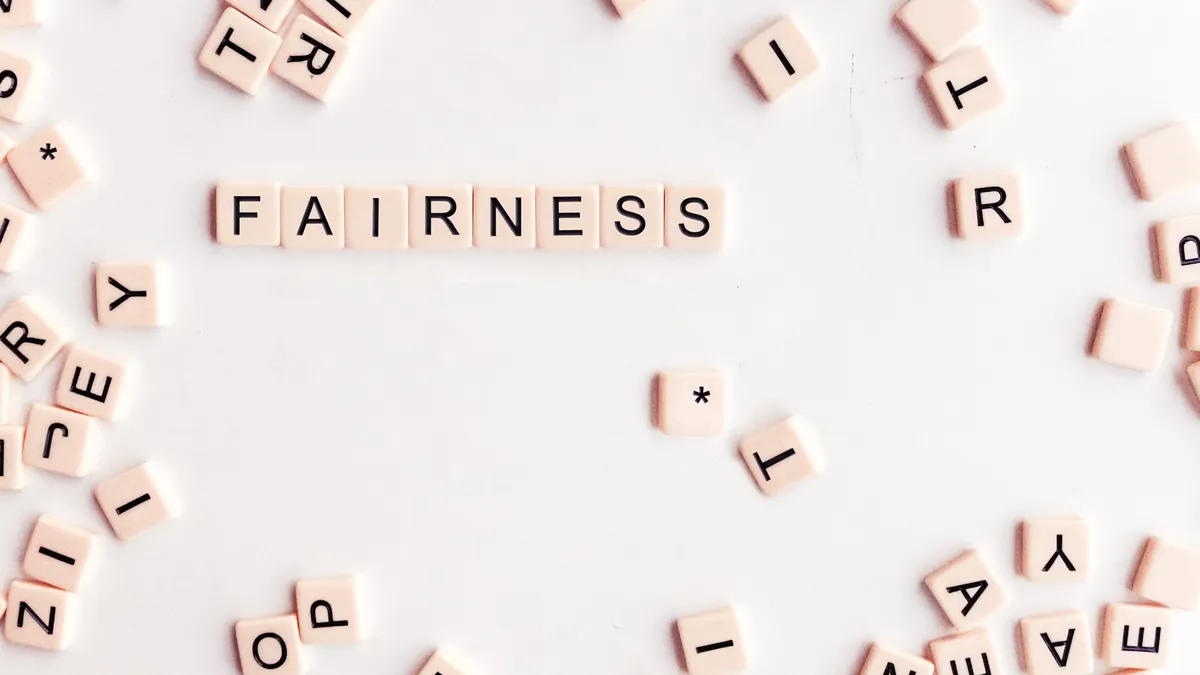

OTTO advocates for inclusive language that represents men, women, and people of all genders. In 2019, Fairlanguage supported us in this process. Today, gender-inclusive language is part of everyday life at OTTO.
At OTTO, gender-inclusive language has been part of our communication since 2019. It is not a short-term trend but an expression of our commitment to respect, appreciation, and diversity. At the same time, language is constantly evolving. That is why we continuously explore how to communicate inclusively and what accessibility requirements need to be considered.
Why OTTO Uses Gender-Inclusive Language
Language does not just describe the world; it also influences our perception of it. Who is visible in texts and who is not can influence people’s sense of belonging and identification. OTTO aims to address people as respectfully as possible, regardless of gender. Consequently, gender-inclusive language has become established in corporate communication, branding, and customer service at OTTO. Today, it is part of everyday language for many employees and is used in numerous internal and external communication formats.
OTTO’s approach to gender-inclusive language did not begin as a short-term initiative. Over the years, guidelines have been developed, training courses offered, learning materials created, and designated contacts appointed to support employees with questions.
The topic is now an integral part of our communications work. We do not want to make language unnecessarily complicated. The goal is to find a form of communication that is respectful, understandable, and as inclusive as possible. That is why we regularly take new insights, societal developments, and technological changes into account.
Why Accessibility Must Be Considered
The discussion about gender-inclusive language is increasingly being complemented by another important aspect: digital accessibility. People access information in very different ways. Some read texts directly on the screen, while others have them read aloud by screen readers or use Braille displays. This raises the question of how language can be designed so that it is accessible and understandable to as many people as possible.
It is precisely at this point that the recommendations of the German Federation of the Blind and Partially Sighted (DBSV) come into play. The association points out that certain abbreviated forms of gender-inclusive language can present challenges when using assistive technologies. These include special characters such as asterisks, underscores, or colons. According to the DBSV, gender-neutral formulations are often the most accessible solution. Examples include terms like “employees,” “team,” “specialists,” or “workers.”
Between Visibility and Readability
The debate shows that different goals need to be balanced. On the one hand, there is the desire to address people visibly and respectfully, regardless of their gender. On the other hand, communication should be as accessible as possible. Ultimately, both objectives share the same goal: participation. In practice, this often means carefully weighing different linguistic approaches.
At OTTO, we have consciously chosen to use the gender asterisk. The aim is to make people of as many genders as possible visible in language. The asterisk symbolizes gender diversity and explicitly includes trans, intersex, and non-binary people.
Three Core Principles of Gender-Inclusive Language at OTTO
Communication should be respectful.
Communication should be understandable.
Communication should enable as many people as possible to access information.
Therefore, we do not see gender-inclusive language as a rigid set of rules but as part of responsible communication.