


Responsibility
OTTO unveils action plan for the environment and supply chain
As the largest German online shop, OTTO will push forward its action plan for climate protection, resource conservation, and supply chain transparency over the next three years. The focus is on concrete innovations in product range and packaging.

During the annual press conference in March 2025**, it** became clear that climate and environmental protection remain key issues for OTTO. The company aims to continue acting in line with the shareholder vision “Responsible commerce that inspires,” even in economically challenging times. Marc Opelt, CEO of OTTO**,** said: “We want to support our customers in making more conscious decisions. OTTO intends to increase the share of products from certified production, especially in the furniture, home, and home décor segments.”
Science Based Targets at OTTO
OTTO is further developing its strategy and planning numerous innovations over the next three years**, including measures relating to** climate protection, product range development, and packaging. These are based on the Otto Group's overarching efforts, to which OTTO makes a significant contribution.
The updated strategy is based on the CSRD-compliant materiality analysis and examines the negative impacts of business activities on people and the environment**, as well as** the opportunities and risks these issues pose for the company. CSRD-compliant reporting standardizes the disclosure of information, increasing transparency and comparability between companies. The CSRD reporting obligation is expected to take effect in the 2027/28 fiscal year. Thorough analysis and reporting on environmental, social, and governance issues (ESG) also enable companies to better identify and manage opportunities and risks.
OTTO is also committed to a Science Based Target (SBT) with three sub-goals, representing a science-based climate target. The Science Based Targets initiative (SBTi) supports companies in aligning their business strategies with the 1.5°C target under the Paris Agreement. The SBTi independently reviews and validates companies’ climate targets. OTTO voluntarily goes beyond the SBTi requirements and includes emissions from its marketplace business in its own climate targets. This is a distinctive approach within the industry and underscores the importance of this issue for the company.
OTTO aims to further reduce CO2 emissions
OTTO aims to reduce its carbon footprint by 42 percent by 2031 compared with the 2021 base year. This goal was established and validated in collaboration with the SBTi. All CO2 emissions generated along the value chain during the production of items are taken into account, from production and transport through to the use phase by customers.
Initial measures that have been defined and initiated include expanding the range of and creating purchase incentives for energy-efficient appliances, increasing the use of recycled materials in products, and using renewable energy in production.
Furthermore, the Hamburg-based company continues to work on shifting freight transport from air to sea or rail. Less than 2 percent of goods transported as part of OTTO’s retail business are shipped by air freight. Last year, biofuels replaced an amount of conventional fuel equivalent to 25 percent of OTTO’s sea freight emissions.
Overview of measures:
Certified product range
By 2028, OTTO plans to increase the share of preferred fibers, such as recycled fibers, in all of its own and licensed brands from the current 46 percent to almost 60 percent. A significant focus is on furniture and home textiles. A key factor here is the transition to recycled fibers. For many years, OTTO has also relied on FSC®-certified wood. Last year, the share used in its own and licensed brands was 98 percent**, with a target of reaching** 100 percent by 2028.
Better packaging
OTTO is pursuing several approaches in this area:
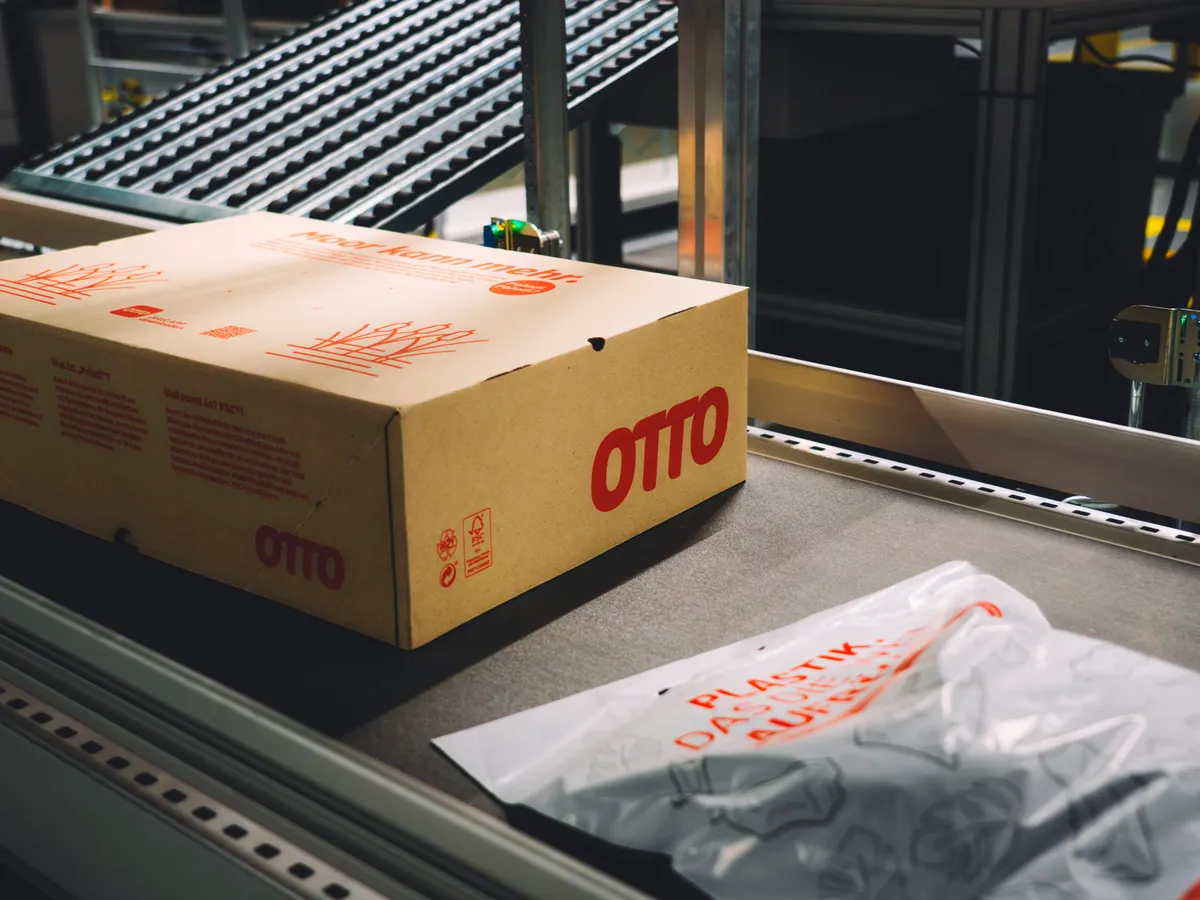
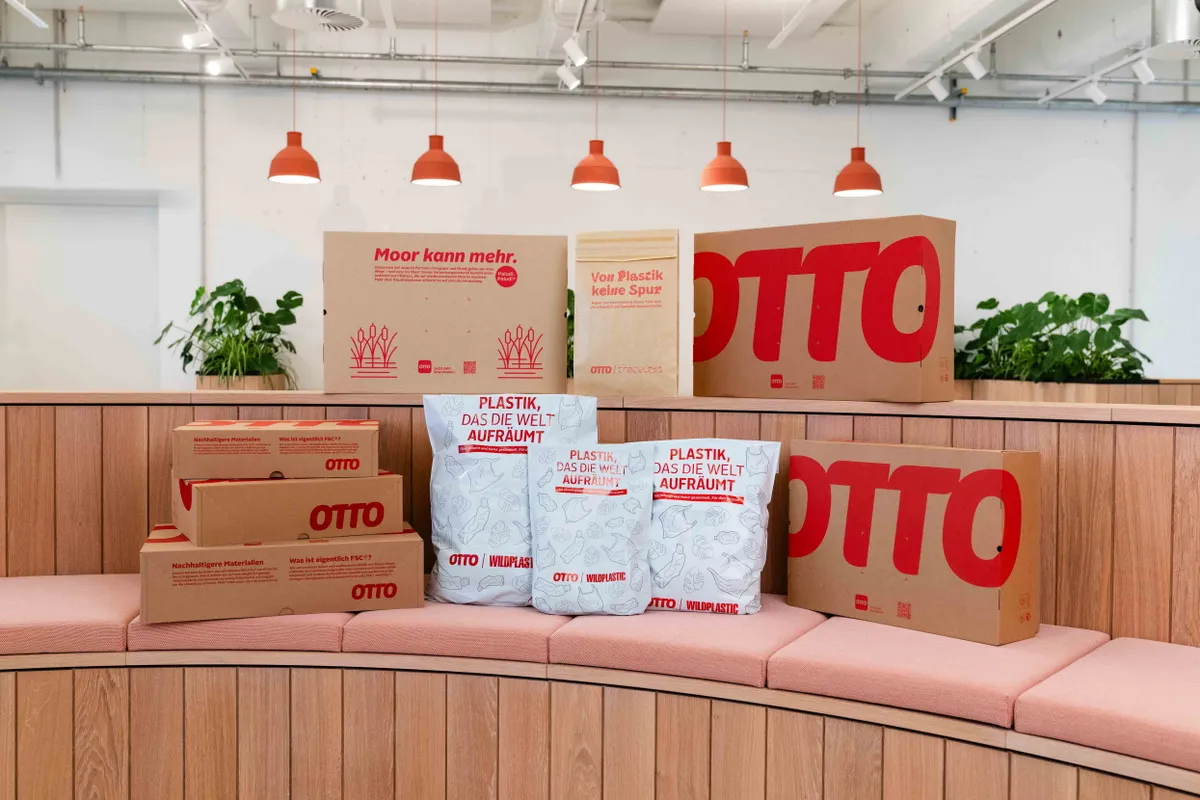
Further development of the shipping carton with Paludi biomass (2): In 2025, OTTO launched a test-and-learn phase exploring additional processing options and plant species. The goal is to produce the cartons using the highest possible proportion of Paludi biomass. The target is to reach 50 percent by the end of 2026 and 100 percent by the end of 2027.
Shipping bags made of recycled plastic in collaboration with the start-up WILDPLASTIC: Introduction of a digital product passport: through a QR code on the shipping bags, OTTO customers can now find information about the country in which the plastic used for the bag was collected.
Biodegradable shipping bags in collaboration with the start-up traceless: OTTO is currently testing a new prototype together with the Fraunhofer Institute with the aim of scaling up the packaging solution in the future.
Social training
Over the next three years, OTTO will provide targeted training to key suppliers of its own and licensed brands in high-risk countries on topics including the prevention of child labor, living wages, safe working environments, freely chosen employment, and reasonable working hours. The goal is to improve the lives of workers in the supply chains and inform them about their rights.
Footnotes:
(1) Source: Representative study by the Cogitaris market research institute on behalf of OTTO from 2025 (n=1,676: 1,104 non-buyers of OTTO (69%) and 496 buyers of OTTO (31%) regarding the respondents' relationship to sustainability.
(2) When a peatland dries out or is drained for agricultural use, it releases stored carbon, resulting in high CO2 emissions. The cultivation of Paludi crops is one way to encourage farmers to transform drained peatlands into intact, i.e., rewetted peatlands, and put them to productive use.
Contact