


AI & Technology
How OTTO uses artificial intelligence for sales forecasting
With more than 19 million items, OTTO is the largest German online retailer. To ensure that every product is available in sufficient quantities and to avoid buying items beyond demand, the Hamburg-based company relies on artificial intelligence (AI).

Since 2019, OTTO has used a purpose-built solution to forecast future item sales with the help of AI. This “AI forecasting” is a central part of strategic planning and of the operational management of the retail business. The forecasts serve the company as the basis for all end-to-end management for retail teams and logistics.
AI-supported sales forecasts: how profitable is an item?
AI forecasting offers a holistic “look into the future” for everyone involved in the process – from range planning to delivery to end customers. This lets OTTO know which items will arrive in the warehouse and when, and what sales to expect at what time.
The AI-supported sales forecasts aim to assess a product’s profitability. They help to decide whether and in what quantity an item should be added to the range and by which route it is distributed – that is, for example, whether products should be distributed as stock items via the group’s own logistics or sent directly from the manufacturer to customers. Based on the answers, the responsible departments can make informed decisions for purchasing, warehousing, marketing and many other areas. Sales can also use these insights to plan sales promotions in order to have the right offer ready in periods of high demand.
Optimised warehouse logistics thanks to artificial intelligence
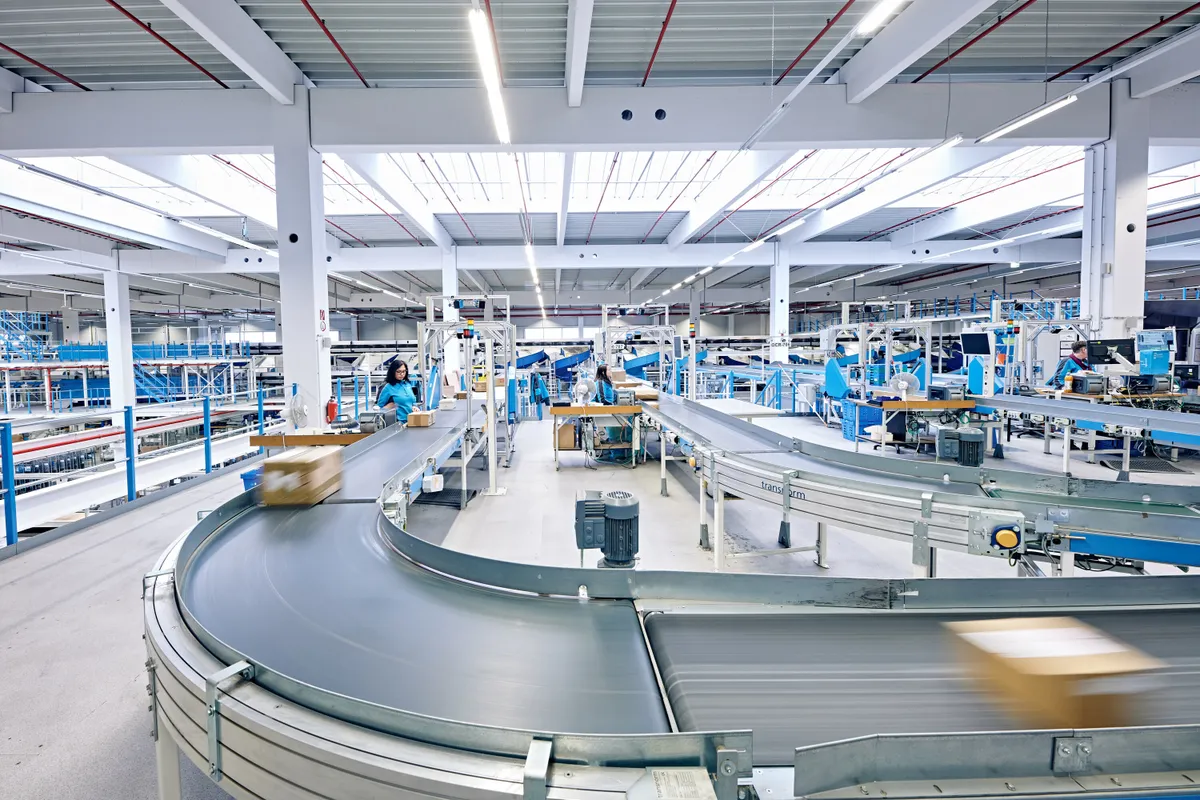
OTTO uses the AI to determine procurement quantities according to need, in order to reduce overstock that the company would otherwise have to sell in the sale, in some cases at high losses. In this way, OTTO can also optimise its warehouse logistics, as only what is actually needed is kept in stock. Not least from a sustainability perspective, this is crucial, as it helps suppliers to avoid overproduction.
At the same time, the sales forecasts ensure that items are in stock when demand picks up. The AI even calculates potential revenue losses that could result from unavailability. With success: already, 35 per cent of ranges are reordered automatically.
To enable fast delivery to customers, AI forecasting creates regionalised forecasts. It tries to predict which products will be ordered where and in what quantities. This allows OTTO to optimise its supply chain efficiently, as the relevant items can be delivered in advance to a distribution depot close to the expected order volume. This not only shortens delivery times but also reduces CO2 emissions, as unnecessary transport routes are avoided.
No fortune-telling: when data replaces the crystal ball
These forecasts are anything but fortune-telling. Instead, they anticipate the most likely future scenario on the basis of predefined or current conditions. These include, for example, the price, the current business climate index or sales budgets. Where a machine used to calculate results using a formula fed in by humans, today the AI determines the formula from the data and, in turn, relates the data to each other in terms of dependencies. At OTTO, it does this on the basis of around 30 billion individual forecasts per week. Every day, the possible trajectory of around 2.5 million item numbers over the next 450 days is analysed. The data used for this includes historical sales figures, customer behaviour, seasonal trends, public holidays and planned marketing activities, among other things. The weather can also be included as a metric, for example to anticipate increased sales of fans during upcoming heatwaves.
AI forecasting: the forecasts look positive
The use of AI pays off: thanks to the precise predictions, OTTO has been able to increase the profitability of its ranges, optimise warehouse logistics and raise customer satisfaction through shorter delivery times. No wonder, then, that OTTO is continuously working to improve sales forecasting further. In logistics alone, the company aims to save double-digit millions in the current financial year through forecast-based, automated management. It does not take fortune-telling to see this: AI-supported sales forecasts are the future of economical and responsible e-commerce.
Contact