

Company
30 years of otto.de: OTTO celebrates online anniversary and AI future
Thirty years ago, otto.de went online as one of the first e-commerce offerings in Germany. Today, the largest German online retailer is using this anniversary to shape the transition into the AI age, including the launch of a voice-controlled AI assistant.
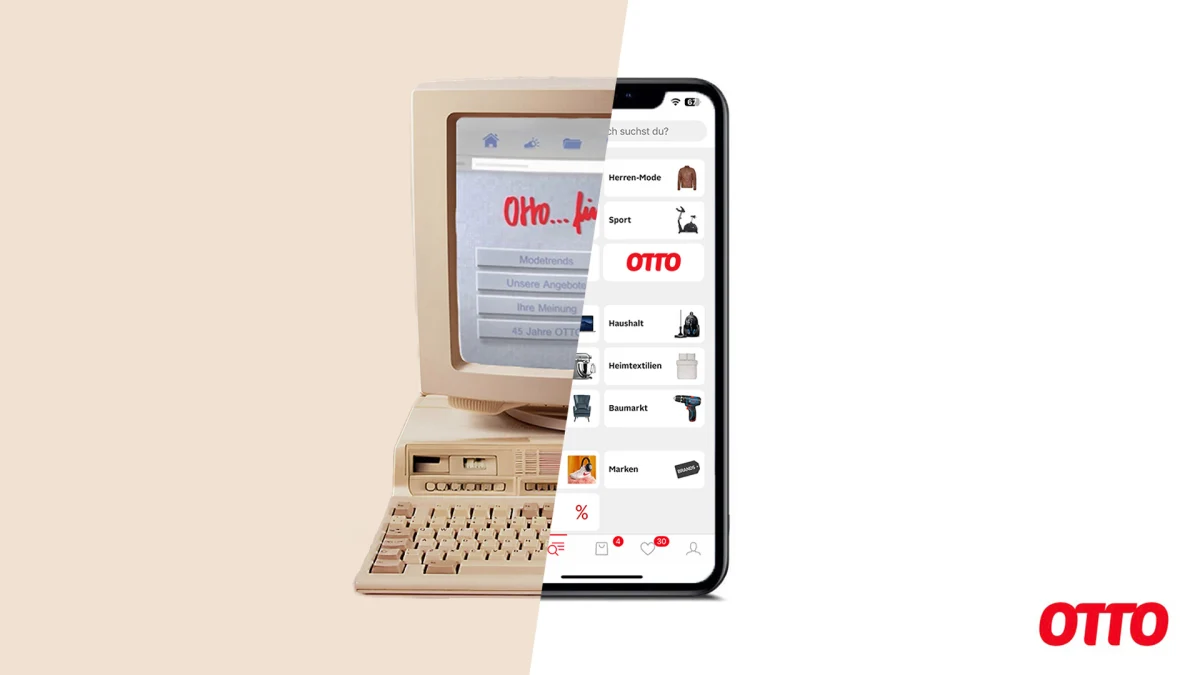

OTTO is celebrating 30 years of e-commerce. In 1995, the then catalogue mail-order company went live with otto.de as one of the first German companies to do so. Today, the domain is home to the largest German online retailer, with more than 12 million active customers. With the dawn of the AI age, three decades after its leap onto the web, the company faces an even more far-reaching transformation of its offering.
OTTO CEO Marc Opelt recalls: “In 1995, only around 250,000 people in Germany had an internet connection at all. Common search engines were called AltaVista or Yahoo. A major competitor from Seattle sold only books.” In this environment, OTTO took its offering, which at the time consisted of only a few hundred items, onto the web. The early head start was driven above all by Prof. Dr Michael Otto, who as Chairman of the Board made regular inspirational trips to Silicon Valley in the 1980s and 1990s and brought awareness of the potential of digitalisation into the company.
From catalogue to digital pioneer
The launch of otto.de opened up a completely new shopping experience for OTTO customers. “The leap onto the web was a paradigm shift. Hardly anyone would have thought that anything could replace the catalogue, which had already been a fixture at OTTO for 46 years,” recalls Opelt. It would still take until 2018 for the OTTO catalogue to be discontinued for good, but the foundation for the transformation into an online shop had been laid. Today, over 12 million customers access OTTO’s digital offering of around 18 million items – not only in the browser but, at over 75 per cent, predominantly via the app.
Setting off into the AI age
The dynamism of current developments in artificial intelligence is every bit as great as at the start of the internet, believes Opelt: “Thirty years ago we asked ourselves the same questions as we do today with regard to GenAI and the like: how will our target groups find our offering in future? What does it do to our business model? Will our customers accept the technology at all? And yet the changes brought by AI are potentially far more far-reaching than those the internet brought back then. AI affects practically every one of our business processes, from logistics planning to user experience.” In fact, AI has long been found in all value streams at OTTO. More than 70 AI solutions are already live. More than 100 experts work on their development every day.
AI commerce: the shopping experience of the future
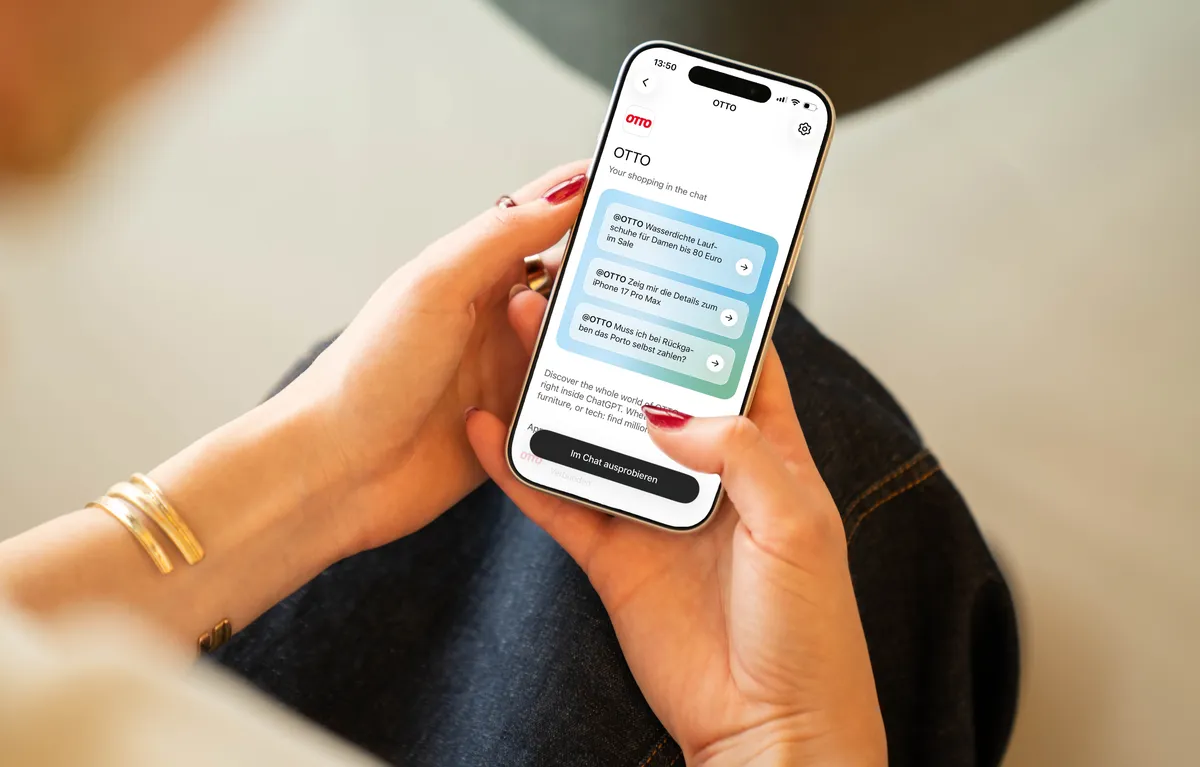
OTTO customers already receive an AI-supported, personalised shopping experience with suitable product suggestions based on their behaviour. The next step: an AI assistant that helps customers find the product they want through dialogue, in writing or in spoken language. “AI allows us to transfer the advice offered in physical retail into the digital space. I can talk to the assistant and tell it exactly what I need, for example a washing machine with a high efficiency rating for a family of four. The AI asks follow-up questions and, in conversation, we get closer to the product we want,” explains Opelt. OTTO plans to launch such an AI assistant by Black Friday on 27 November 2025.
But the changes in shopping behaviour could be even more far-reaching in the foreseeable future, as the OTTO CEO knows: “We think about AI commerce holistically. Above all, there is the question of how customers will find our offering in future. It will certainly increasingly happen via AI platforms such as ChatGPT or Gemini. We therefore have to make sure that our products can be found by these solutions. In the future, customers might also outsource their purchases entirely to AI agents that autonomously identify needs and trigger orders. We are already preparing our technical infrastructure for this.”